I was presented with a map of the town today... some indications on it are pretty "tongue-in-cheek" as the yankees say... for example:Road names include Pizza House road, Stadium road, Some road, Some bigger road, Some other road, Some main road... And landmarks include two "Secret beer shops", Some weird building, Crappy bridge, Big flaming pink [insert NGO name] guesthouse, Malaria Swamps, Puke green house, Governor's Pimp pad, Retarded intersection and my favorite, Big UFO Landing pad.
All restaurants have indicated "Beer!!!" under their pin, when they serve it, and directions out of the city include: "To north of Banda Aceh via crappy road and tsunami wastelands", "To west coast beaches, that wood fired pizza place and Meulaboh", and "To Medan and the free world, a hell of a long way."This goes to say, they haven't figured out street names and addresses in this country yet.
Also, yesterday went down in history as the day where we managed to find a cab (a becak, mind you, it's a motorcycle with a side care, and the most common form of transportation), which knew to take us to the expat restaurant with beer.
The Beaver
My guest map is wonderful ! And you'd all be wonderful to post, all of you lurk mode readers!
Thanks and may the winds of Fate blow your way !
Showing posts with label tourism. Show all posts
Showing posts with label tourism. Show all posts
May 07, 2008


July 05, 2007
Afghani stuff
Well, I'm back in KBL and haven't got much to report from the fishbowl, so I'm posting a bunch of Afghani stuff.
I go home in 7 days, and I can't wait.
Afghani book

The Kite Runner tells the story of Amir, a well-to-do Pashtun boy from the Wazir Akbar Khan district of Kabul, who is haunted by the guilt of betraying his childhood friend Hassan, the son of his father's Hazara servant. The story is set against a backdrop of tumultuous events, from the fall of the monarchy in Afghanistan through the Soviet invasion, the mass exodus of refugees to Pakistan and the United States, and the Taliban regime.
It's a very, very taking story - and beyond touching. A must-read.
The author's website :
http://www.khaledhosseini.com/
Afghani food

Ingredients:
* 3 md Eggplants
* 2 1/2 tablespoons of Coarse Salt
* 1/4 cup Corn oil
* 1 1/2 cup Tomato sauce
* 1/4 tablespoons of Pepper
* 1 tablespoons of Hot red chili flakes - or minced fresh chiles
* 2 tablespoons of Ground cinnamon
* 1 tablespoons of Crushed dried mint
Directions:
Slice the eggplants crosswise into 1 1/2 inch thick pieces. Sprinkle them with 2 t. coarse salt and let stand for 15 minutes. rinse eggplants under cold water, which removes the bitter taste, rinse, and dry well on a towel.
Heat the oil in a skillet and lightly brown eggplant slices over moderate heat for 3 minutes. Remove and put into a serving bowl. Cool. Put the tomato sauce, pepper, chile, cinnamon, mint and 1/2 t. salt, if wanted, in a pan. Simmer over low heat for 10 minutes, which is long enough to
integrate the flavors. Pour this over the eggplant; refrigerate until ready to use. The salad can remain in the refrigerator for several days. Serve cold or at room temperature.
The Beaver

My guest map is wonderful ! And you'd all be wonderful to post, all of you lurk mode readers!I go home in 7 days, and I can't wait.
Afghani book
| THE KITE RUNNER |
| Category: | Books |
| Genre: | Literature & Fiction |
| Author: | Khaled Hosseini |
It's a very, very taking story - and beyond touching. A must-read.
The author's website :
http://www.khaledhosseini.com/
Afghani food
| BONJAN SALAT (AFGHANI SPICY EGGPLANT SALAD) |
| Category: | | Salads |
| Style: | | Other |
| Special Consideration: | | Vegetarian |
| Servings: | | 8 |
Ingredients:
* 3 md Eggplants
* 2 1/2 tablespoons of Coarse Salt
* 1/4 cup Corn oil
* 1 1/2 cup Tomato sauce
* 1/4 tablespoons of Pepper
* 1 tablespoons of Hot red chili flakes - or minced fresh chiles
* 2 tablespoons of Ground cinnamon
* 1 tablespoons of Crushed dried mint
Directions:
Slice the eggplants crosswise into 1 1/2 inch thick pieces. Sprinkle them with 2 t. coarse salt and let stand for 15 minutes. rinse eggplants under cold water, which removes the bitter taste, rinse, and dry well on a towel.
Heat the oil in a skillet and lightly brown eggplant slices over moderate heat for 3 minutes. Remove and put into a serving bowl. Cool. Put the tomato sauce, pepper, chile, cinnamon, mint and 1/2 t. salt, if wanted, in a pan. Simmer over low heat for 10 minutes, which is long enough to
integrate the flavors. Pour this over the eggplant; refrigerate until ready to use. The salad can remain in the refrigerator for several days. Serve cold or at room temperature.
The Beaver
Thanks and may the winds of Fate blow your way !
May 07, 2007
A weekend yet again spent sleeping
I went to Al-Faisal Mosque in Islamabad. Thank god I did, because otherwise, I spent my weekend sleeping.
The Mosque is an impressive thing. It sits in a nest of hills, which, when you are on the outside terrasse, gives it the most impressive, beautiful sight. The hills are green, and the birds are rather loud. It makes one think a lot about extremism to be in such a peaceful place. I'm glad I went - it confirmed my intuition that God does sit in such places, but that his word (and work) are perverted by humans. A common thing, really, when you think of it.

It was an afternoon full of contrasts, though, to visit the mosque (no pics inside, sorry), and then to have a milkshake with my teammates at the Hot-Spot, an indeed burning place where one can enjoy home-made bagels and Ice-cream, and a "Death by Chocolate pie" which I've yet to try.

I was also lucky to be taken out by co-workers. Sweet people, really. Sometimes, I'm really blessed.
Oh geez, I guess I didn't sleep all weekend after all !
The Beaver
My guest map is wonderful ! And you'd all be wonderful to post, all of you lurk mode readers!
Thanks and may the winds of Fate blow your way !
The Mosque is an impressive thing. It sits in a nest of hills, which, when you are on the outside terrasse, gives it the most impressive, beautiful sight. The hills are green, and the birds are rather loud. It makes one think a lot about extremism to be in such a peaceful place. I'm glad I went - it confirmed my intuition that God does sit in such places, but that his word (and work) are perverted by humans. A common thing, really, when you think of it.
It was an afternoon full of contrasts, though, to visit the mosque (no pics inside, sorry), and then to have a milkshake with my teammates at the Hot-Spot, an indeed burning place where one can enjoy home-made bagels and Ice-cream, and a "Death by Chocolate pie" which I've yet to try.
I was also lucky to be taken out by co-workers. Sweet people, really. Sometimes, I'm really blessed.
Oh geez, I guess I didn't sleep all weekend after all !
The Beaver
My guest map is wonderful ! And you'd all be wonderful to post, all of you lurk mode readers!
Thanks and may the winds of Fate blow your way !
February 27, 2007
Beaver Presents: The Secret of the Saree (Bilingual Video)
My humble attempt at wearing a saree. Of course, when I got to the office, the ladies helped me out to fix it up a little !!!
The Beaver
My guest map is wonderful ! And you'd all be wonderful to post, all of you lurk mode readers!
Thanks and may the winds of Fate blow your way !
The Beaver
My guest map is wonderful ! And you'd all be wonderful to post, all of you lurk mode readers!
Thanks and may the winds of Fate blow your way !
February 25, 2007
The Streets of Ahmedabad... A Beaver Production
The Beaver
My guest map is wonderful ! And you'd all be wonderful to post, all of you lurk mode readers!
Thanks and may the winds of Fate blow your way !
February 22, 2007
Ahmedabad in pictures
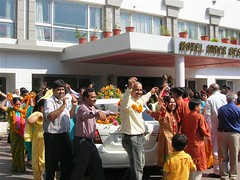
Here are some pix I took during my last weekend in Ahmedabad - includes some street scenes and a visit of Sabarmati Ashram.
Just click on the pic for the whole set ! (or on the Flickr badge on the right sidebar)
The Beaver
My guest map is wonderful ! And you'd all be wonderful to post, all of you lurk mode readers!Just click on the pic for the whole set ! (or on the Flickr badge on the right sidebar)
The Beaver
Thanks and may the winds of Fate blow your way !
February 18, 2007
In order to be Indiana Beaver Jones, walking in sewage barefeet is part of the deal
Upcoming posts:
- visiting Mother Theresa's home
- the super-power of complaining
- Gandhi's Ashram - the pearl of Ahmedabad
One of the things I haven't done enough of since I've been in India, is blog about touristic or cultural highlights. Since I am travelling here for business - there is nothing surprising there. Nonetheless, I should treat my readers with these experiences, so I am starting with a flashback to Kolkata where I managed to do just a little bit of tourism.
I went to visit the Kalighat Temple in KOL just shy of two weeks ago now, with my friend and collegue P. and his lovely family. I didn't take my camera on tour with me since it is forbidden to photograph inside the temple - and I really had no clue what to expect in terms of herd phenomenoms.
Kalighat is one of the aspect of the goddess Kali (as in Kalimaa - Indiana Jones: Temple of doom.)
But stereotypes aside - it was much less scary then you might expect - and I did not have eyeball soup! It was quite an adventure though !
Kali (Sanskrit: Kālī, Devanāgari: काली) (Pronounced /kɑːliː/) is a goddess with a long and complex history in Hinduism. Although sometimes presented as dark and violent, her earliest incarnation as a figure of annihilation still has some influence, while more complex Tantric beliefs sometimes extend her role so far as to be the Ultimate Reality (Brahman) and Source of Being. Finally, the comparatively recent devotional movement largely conceives of Kali as a straightforwardly benevolent mother-goddess. (For more on Kali do visit Wikipedia's Article on on the matter.)
Anyway, I borrowed some pics to give you guys an idea.

We finally made it to the temple where just getting in was an ordeal. There were people, people and more people. I remember wondering where all the people were in Kolkata. Now I know. They are all at the Kalighat temple !!!
Once we'd pushed and shoved for a good 10 minutes (include 3 minutes of balancing the slippery floors and the flithy feet with unknown substances sticking under the toes), we made it inside and boy - was it a site. Scores and score of people there (like I said - it felt like the whole city was there) trying frantically to present their offering to the goddess.
The two things I saw that somewhat participated in the cultural schock (aside from the smell, the filthy feet and the massive amount of people there) was all the pushing and shoving. I even saw a guy threaten to pummel his friend with a coconut (presumably Prasad) and a woman nearly got her saree unrolled as she was exiting the temple!!! (Yes, a saree can be "unrolled" - for more details, click here.)
The priest starte the Puja (see below) with pressing his right thumb to our foreheads and annointing us with a red mixture. He then proceeded to some chanting which we were to repeat. Of course, being completely ignorant, I did my very best to repeat what was said. He concluded by putting his hands on our heads in a sign of blessing.
Pūjā (Devanagari: पूजा) (alternative transliteration Pooja, Sanskrit: reverence or worship) is a religious ritual that Hindus perform on a variety of occasions to pray or show respect to God (or gods). Puja consists of meditation (dhyana), austerity (tapa), chanting (mantra), scripture reading (svadhyaya), offering food (thaal) and prostrations (panchanga or ashtanga pranama, dandavat). The individual also applies a tilaka mark on the forehead with sandalwood paste, and then a vermillion (kumkum) dot (chandlo) in its centre. This signifies submission to the Almighty and also His Omnipresence. Puja is usually concluded with aarti to the Lord. (See the Full Wikipedia Article)
It was then time to push forward towards the idol to present the Prasad (specifically, the flowers) to her. I said present, but it was more like throwing flowers at a statue then anything else.
Now, I am betting that you wonder what the statue looked like. I was expecting something like this (based both on the Indiana Jones movie and the Wikipedia article) :

Instead - I saw this (more like - caught a glimpse of it):
India, I tell you, never ceased to surprise me !
The Beaver
My guest map is wonderful ! And you'd all be wonderful to post, all of you lurk mode readers!
Thanks and may the winds of Fate blow your way !
- visiting Mother Theresa's home
- the super-power of complaining
- Gandhi's Ashram - the pearl of Ahmedabad
One of the things I haven't done enough of since I've been in India, is blog about touristic or cultural highlights. Since I am travelling here for business - there is nothing surprising there. Nonetheless, I should treat my readers with these experiences, so I am starting with a flashback to Kolkata where I managed to do just a little bit of tourism.
I went to visit the Kalighat Temple in KOL just shy of two weeks ago now, with my friend and collegue P. and his lovely family. I didn't take my camera on tour with me since it is forbidden to photograph inside the temple - and I really had no clue what to expect in terms of herd phenomenoms.
Kalighat is one of the aspect of the goddess Kali (as in Kalimaa - Indiana Jones: Temple of doom.)

But stereotypes aside - it was much less scary then you might expect - and I did not have eyeball soup! It was quite an adventure though !
Kali (Sanskrit: Kālī, Devanāgari: काली) (Pronounced /kɑːliː/) is a goddess with a long and complex history in Hinduism. Although sometimes presented as dark and violent, her earliest incarnation as a figure of annihilation still has some influence, while more complex Tantric beliefs sometimes extend her role so far as to be the Ultimate Reality (Brahman) and Source of Being. Finally, the comparatively recent devotional movement largely conceives of Kali as a straightforwardly benevolent mother-goddess. (For more on Kali do visit Wikipedia's Article on on the matter.)
Anyway, I borrowed some pics to give you guys an idea.
It started with meeting up with my friends to go to the temple. We met with the priest somewhere off the temple, purchased the offerings (flower necklaces to be undone and thrown at the idol) and left our shoe to the shoe-minders.
Offerings are refered to in Hindi as Prasad:
Prasāda (Sanskrit: प्रसाद), prasād/prashad (Hindi) or prasādam (Tamil) Prasadam (Telugu) is both a mental condition of generosity, as well as a material substance that is first offered to a deity (in Hinduism) and then consumed (Hinduism and Sikhism). Hindus believe that the prasad has the deity's blessing residing within it. In contemporary Hindu religious practice in India, the desire to get prasada and have darshan (cross referenced) are the two major motivations of pilgrimage and temple visits. (see the Full Wikipedia article)
In this case, the Prasad consisted of necklaces of flowers, and a banana-leaf cone containing 2 cookies, an hibiscus flower (symbol of the goddess) and popped rice.
Offerings are refered to in Hindi as Prasad:
Prasāda (Sanskrit: प्रसाद), prasād/prashad (Hindi) or prasādam (Tamil) Prasadam (Telugu) is both a mental condition of generosity, as well as a material substance that is first offered to a deity (in Hinduism) and then consumed (Hinduism and Sikhism). Hindus believe that the prasad has the deity's blessing residing within it. In contemporary Hindu religious practice in India, the desire to get prasada and have darshan (cross referenced) are the two major motivations of pilgrimage and temple visits. (see the Full Wikipedia article)
In this case, the Prasad consisted of necklaces of flowers, and a banana-leaf cone containing 2 cookies, an hibiscus flower (symbol of the goddess) and popped rice.
We then walked about 10 minutes to barefeet to the temple.
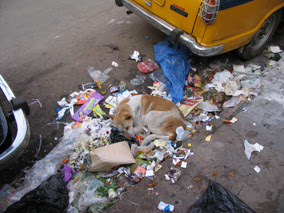
As you can see, the streets of Kolkata are sparkling clean, and it's completely logical to remove one's shoes 15 minutes before entering the holy place, so that one can enter the temple with scarily dirty (and itchy) feet. But anyway, in India, do as the Indians do. I am not complaining.

Once we'd pushed and shoved for a good 10 minutes (include 3 minutes of balancing the slippery floors and the flithy feet with unknown substances sticking under the toes), we made it inside and boy - was it a site. Scores and score of people there (like I said - it felt like the whole city was there) trying frantically to present their offering to the goddess.
The two things I saw that somewhat participated in the cultural schock (aside from the smell, the filthy feet and the massive amount of people there) was all the pushing and shoving. I even saw a guy threaten to pummel his friend with a coconut (presumably Prasad) and a woman nearly got her saree unrolled as she was exiting the temple!!! (Yes, a saree can be "unrolled" - for more details, click here.)
The priest starte the Puja (see below) with pressing his right thumb to our foreheads and annointing us with a red mixture. He then proceeded to some chanting which we were to repeat. Of course, being completely ignorant, I did my very best to repeat what was said. He concluded by putting his hands on our heads in a sign of blessing.
Pūjā (Devanagari: पूजा) (alternative transliteration Pooja, Sanskrit: reverence or worship) is a religious ritual that Hindus perform on a variety of occasions to pray or show respect to God (or gods). Puja consists of meditation (dhyana), austerity (tapa), chanting (mantra), scripture reading (svadhyaya), offering food (thaal) and prostrations (panchanga or ashtanga pranama, dandavat). The individual also applies a tilaka mark on the forehead with sandalwood paste, and then a vermillion (kumkum) dot (chandlo) in its centre. This signifies submission to the Almighty and also His Omnipresence. Puja is usually concluded with aarti to the Lord. (See the Full Wikipedia Article)
It was then time to push forward towards the idol to present the Prasad (specifically, the flowers) to her. I said present, but it was more like throwing flowers at a statue then anything else.
Now, I am betting that you wonder what the statue looked like. I was expecting something like this (based both on the Indiana Jones movie and the Wikipedia article) :

Instead - I saw this (more like - caught a glimpse of it):

India, I tell you, never ceased to surprise me !
The Beaver
Thanks and may the winds of Fate blow your way !
October 02, 2006
10 000 ! - and the low-down on Bujumbura
Last night, my hit counter went over the edge of 10,000 visits !
Thanks everybody.
Ok - about Burundi (I have SOOOO much stuff to do. I should TOTALLY be working right now.)
It's a nice country. I like the Burundians. It's green. Food is good. Potential for partying is exponential compared to Aceh.
When I arrived at the hotel, I settled down in my 2-star bedroom like it was the Ritz-Carlton. What I like best about my room is the view outside on the beautiful flamboyant tree:
On my second day (a Saturday), my friend/colleague and I went to Club Tanganyika, by the namesake lake - we could see the congolese mountains looming over us.
Click here for the entire photoset of pics from Burundi.
In a few days I'll be going to France to attend a family event before I get back to BUJ and work like a madwoman again. This is getting pretty hectic, and it's great. I would not want to be less busy.
The Beaver
My guest map is wonderful ! And you'd all be wonderful to post, all of you lurk mode readers!
Thanks and may the winds of Fate blow your way !
Thanks everybody.
Ok - about Burundi (I have SOOOO much stuff to do. I should TOTALLY be working right now.)
It's a nice country. I like the Burundians. It's green. Food is good. Potential for partying is exponential compared to Aceh.
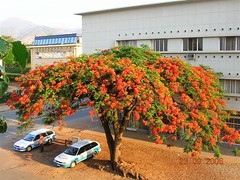
When I arrived at the hotel, I settled down in my 2-star bedroom like it was the Ritz-Carlton. What I like best about my room is the view outside on the beautiful flamboyant tree:
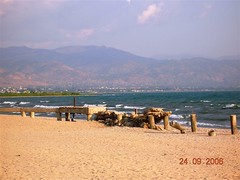
On my second day (a Saturday), my friend/colleague and I went to Club Tanganyika, by the namesake lake - we could see the congolese mountains looming over us.
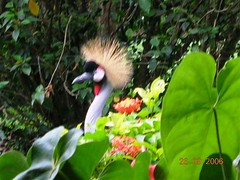
Click here for the entire photoset of pics from Burundi.
In a few days I'll be going to France to attend a family event before I get back to BUJ and work like a madwoman again. This is getting pretty hectic, and it's great. I would not want to be less busy.
The Beaver
My guest map is wonderful ! And you'd all be wonderful to post, all of you lurk mode readers!
Thanks and may the winds of Fate blow your way !
April 06, 2006
SAGA PART 4 – BENIN, AT LAST !
I went in the office on Friday, only to find out that they were closing at 2! So this left me with a Saturday to rest, and a Sunday to visit the very poetic town of Ganvie :
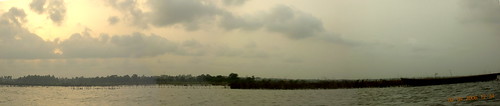
It was amazing to visit the town on water, and to wave hello to all the children screaming “Yovo! Yovo!” (Apparently, that’s what whiteys are called, here.)
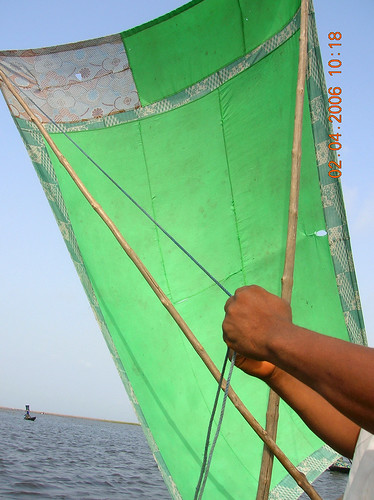
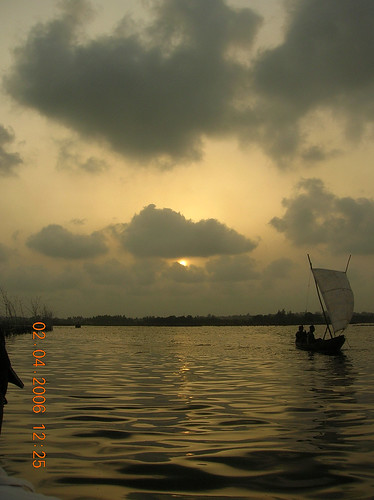
The ride to the town itself took about 40 minutes, on a small canoe hailed with a makeshift sail:
When you get to the village of Ganvie, it’s like an apparition out of a dream:
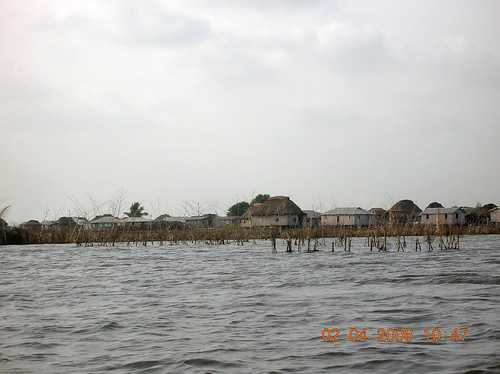
On and around, we weave in and out of canals. The village of Ganvie was built in the 18th century by locals that were fleeing the slave trade. Since, the population has grown to a 30,000 inhabitants. Ganvie has a primary school and a small hospital, but of better lack of a welcoming infrastructure, all older kids who wish to pursue an education need to leave. The people of Ganvie live mostly of fishing, but there has been a growth in tourism recently.
On the way back, the sun was setting and I marveled at the poetry of the scenery, as we slowly made our way back to shore:
The Beaver
Thanks and may the winds of Fate blow your way !
December 03, 2005
Travelling Beaver Advice / Conseils du Castor Voyageur
Pour les nouveaux lecteurs, je dois clarifier que je ne vis pas en Afrique du Sud. Je travaille comme Auditeur Interne (on nous appelle la "Paper Police") pour une agence de developpement internationale. Dans le cadre de mon travail je suis appeler a voyager 100% du temps, des missions de 6 a 8 semaines bout a bout. Je suis en ce moment en train d'auditer notre programme en Afrique du Sud, mais je quitte le 16 decembre pour les fetes a Mtl. Je ne retourne pas en Afrique du Sud en Janvier.
For new readers, I must clarify that I do not live in South Africa. I am an Internal Auditor (some call us “the Paper Police”) for an international development agency. For my work, I have to travel 100% of the time, which involves missions lasting 6 to 8 weeks. I am presently auditing our South-African activities, but I will leave on December 16th to go spend the holidays in Montreal. I am not returning to South Africa in January.
Toutefois, si j'avais quelque conseil a donner aux voyageurs curieux de visiter l’Afrique du Sud, je dirai:
However, if I had any advice to give travelers interested in South Africa, I would say :
The Beaver
Thanks, Kingston Girl,for giving me a link!
My guest map is wonderful ! And you'd all be wonderful to post, all of you lurk mode readers!
Thanks and may the winds of Fate blow your way !
For new readers, I must clarify that I do not live in South Africa. I am an Internal Auditor (some call us “the Paper Police”) for an international development agency. For my work, I have to travel 100% of the time, which involves missions lasting 6 to 8 weeks. I am presently auditing our South-African activities, but I will leave on December 16th to go spend the holidays in Montreal. I am not returning to South Africa in January.
Toutefois, si j'avais quelque conseil a donner aux voyageurs curieux de visiter l’Afrique du Sud, je dirai:
However, if I had any advice to give travelers interested in South Africa, I would say :
- Prevoyez de passer une journee complete a Soweto: entre la maison de Nelson Mandela, l'Eglise Regina Mundi, et le Hector Peterson Memorial, il y a assez a voir et a faire pour combler une journee commencant a 7h le matin.
- Plan for a whole day in Soweto: with Nelson Mandela’s house, Regina Mundi church, and the Hector Peterson Memorial, there is enough to see and do to fill a day starting a 7AM.
- Si vous restez a Johannesburg, Sandton reste l'endroit le plus securitaire. Le taux de criminalite est tres haut, et les femmes sont particulierement la cible de viols a Jo-Burg. Si on combine ce riqsque au taux de prevalence du VIH-SIDA (presque 30%), ca fait peur.
- If you stay in Jo-Burg, Sandton remains the safest area. The crime rate is very high, and women particularly are the target of rape in Jo-Burg. This, combined to the HIV-AIDS prevalence rate (almost 30%) is very scary.
- Ne marchez pas seul après le coucher du Soleil.
- Do not walk outside alone after sunset.
- Donnez-vous une journee pour visiter l'Apartheid Museum.
- Do plan a day to visit the Apartheid Museum.
- Prevoyez une journee pour l'Africa Museum. Ce musee est situe a Newtown, il ya en face un resto tres sympa ou on joue du Jazz Live le samedi soir. La soiree Jazz, c’est a faire absolument, c'est vraiment tres tres sympa. L'Africa Musem est gratuit et absolument immense. Arrivez tot pour ne pas etre frustres de partir. Il y a aussi juste a cote les theatres ou on joue des comedies musicales sud-africaines (noires). Je n'ai pas eu l'occasion d'y aller mais c'est tres bien parait-il.
- Plan a day to visit the Africa Museum. This museum is in Newtown, and right across the street is a fun restaurant where live Jazz is played on Saturday nights. The Jazz evening is a must, it’s a lot of fun. The Africa Museum is free and absolutely huge. Get there early to avoid being frustrated from leaving. Right next door, there are the Theaters where South-African musicals are presented. I didn’t have the chance of going, but I’m told it’s worth it.
- Il serait une bonne idee de passer votre permis international avant de partir. A Jo-Burg, les distances sont longues et les taxis coutent plus cher que de louer une voiture. Par contre, il ne faut pas oublier : en SA, on conduit du cote croche de la route (et non du cote droit) !
- It’s a good idea to have an international permit. In Jo-Burg, distances are long and taxis are more costly then car rentals. Don't forget that people here drive on the wrong side of the road (on not on the right one) !
- Si vous avez des appareils electriques, prevoyez un transfo ou un adapteur comme pour la France. Les prises sont a trois trous mais on peut facilement trouver un adapteur sur place.
- If you have electrical appliances, do plan to have a transformator or adaptor as you would for France. Plugs have 3 pins here, but one can easily find an adaptor for French pins.
- C'est une bonne idee d'apprendre un minimum de langue africaine - le Zulu, Xhosa, Shona et Sutu sont repandus. Ca nous permet de bien nous integrer au Sud-Af noirs.
- It’s a good idea to learn a minimum of African idiom – Zulu, Xhosa, Shona and Sutu are common. This allows us to integrate well with the local black south-africans.
Zulu (J-Burg):
Sawubona = bonjour/Good morning ;
Kunjanie = Ca va?/How are you ;
Njaiapila = ca va bien / I’m doing well ;
Guiabanga = Merci / Thank you.
Sotho (Lesotho):
Me = Madame / Madam
Mtate = Monsieur / Sir
Quialeboa = Merci / Thank you
Ahholo = beaucoup / a lot of.
Afrikaans (Afrikaner):
Danki = merci / Thank you
Plaisir = bienvenue / Welcome.
- En Afrique du Sud, on peut trouver a peu pres n'importe quoi. Pas la peine de s'encombrer de shampoings, etc.
- In SA, one can find about anything. No need to cumber oneself with shampoo etc.
Si vous avez le temps, prevoyez quelques jours au Lesotho (100$ d'avion de Jo-Burg et pas de visa requis pour les ressortissants du Commonwealth ou les Americains). Le paysage est a couper le souffle et les attractions sont plutot hors de l'ordinaire (traces de dinosaures et peintures rupestres entre autres).
If you have time, plan a few days in Lesotho (100USD for an airplane from Jo-Burg, and no visa needed for Commonwealth or American citizens). The landscap is breath taking, and the attractions are out of the ordinary (dinosaur footsteps and cave paintings, amongst others).
The Beaver
Thanks, Kingston Girl,for giving me a link!
My guest map is wonderful ! And you'd all be wonderful to post, all of you lurk mode readers!
Thanks and may the winds of Fate blow your way !
October 28, 2005
Bye Bye Conakry ! (I'm not conna cry!)
Well, that's it ! I am leaving Guinea today, and I thought I'd wrap up with some reflexions on the country. I only spent a month working in Guinea, so the impressions I'm sharing here are in no way intended to be an exhaustive comment on this mysterious and messy country.
Et bien, ca y est ! Je quitte la Guinée aujourd'hui, et j'ai pensé que je concluerai par quelques réflexions sur le pays. J'ai seulement passé un mois a travailler en Guinée, donc les impressions que je partage ici n'ont nullement l'intention d'etre un commentaire approfondi sur ce mystérieux et triste pays.
Guinea.... well, Guinea is beautiful. My experience with Africa was mostly Sahelian countries, so I was very impressed with how green the scenery was. The mountains on the road we took to the site visits were National Geographic material. N'Zerekore (one of the sites) was a particularly pleasant city, quite clean and quiet.
La Guinée.... bien, la Guinée, c'est jolie. Mon expérience avec l'Afrique était pour la plupart avec des pays du Sahel, alors j'ai été très impressionnée par le paysage vert de Guinée. Les montagnes sur la route etaient dignes du National Géographique . N'Zerekore était une ville particulièrement plaisante, propre et tranquille.
Conakry itself does not do Guinea justice : the city is dirty, everything is covered in mold, and there are slumlike habitats pretty much all around, mixed with hotels and appartment buildings. It's depressing to think that a country with so much ressources is so low on the ladder of development. I'd always associated development issues to lack of natural ressources. I guess Guinea is the utmost expression of what bad governance can do to a country otherwise blessed by nature.
Conakry en soi ne rend pas justice a la Guinee : la ville est sale, tout est couvert de moisissure, et il y a des bidonvilles un peu partout, entre des hotels et des immeubles residentiels. C'est deprimant de penser qu'un pays avec tant de ressources est si bas dans l'echelle du developpement. J'avais toujours associe les problemes de developpement au manque de ressources naturelles. J'imagine que la Guinee est l'exemple parfait ce qu'une mauvaise gouvernance peut faire a un pays autrement beni par la nature.
Logistically, it's difficult : no running water (most expatriates who would otherwise need it truck water in for their house), electricity is available according to a certain schedule (my neighboorhood on Monday, yours on Tuesday, and so on) and even then, electricity cuts are numerous and frequent. As well, I've been told that there is effectively no acceptable physician to go consult in Conakry. H's experience confirmed that.
Logistiquement, c'est difficile : pas d'eau courante (la plupart des expatries qui ne peuvent pas vivre sans se font livre de l'eau par camion), l'electricite est disponible selon une certain horaire (chez moi Lundi, chez toi demain, etc.) et meme dans ce cas, les coupures d'electricites sont nombreuses et frequentes. Aussi, il parait qu'il n'y a dans les faits pas de medecin acceptablement competent que l'on puisse consulter a Conakry. L'experience de H a confirme cela.
Guinea is presently governed by a military and it's very visible. Military presence is everywhere. Given all this, I give credit to the Guineans for not being more intent on violent actions.
La Guinee est presentement sous gouvernement militaire, et c'est tres visible. Leur presence est partout. Considerant tout ca, je felicite les Guineens de ne pas etre plus tournes vers la violence.
At the same time, some aspects of Conakry are endearing : the street sellers are selling random items (as in many other African countries), people play soccer on the roundabouts, and it's not uncommon in the morning to see scenes of domestic life right out on the street.
At the same time, some aspects of Conakry are endearing : the street sellers are selling random items (as in many other African countries), people play soccer on the roundabouts, and it's not uncommon in the morning to see scenes of domestic life right out on the street.
En meme temps, certains aspects de Conakry sont attachants : les vendeurs de rue vendent des objets aleatoires (comme c'est le cas aussi dans d'autres pays d'Afrique), les gens jouent au soccer sur les rond-points, et il n'est pas rare de voir le matin dans la rue des scenes de la vie domestique.
It's these last small things that always make me fall in love with Africa, all over again.
Ce sont ces dernieres petites choses qui me font toujours retomber en amour avec l'Afrique.
The local team and the auditors regroup for a team picture (taken by yours beaverly). In the end, the audit process is a collaborative effort, and we got great support from the local team. Yeah team !
L'equipe locale et les auditeurs se retrouvent pour une photo collective (prise par castorement votre). A la fin, le processus d'audit est un effort commun, et on a eu droit a une excellente collaboration de l'equipe locale. Yeee team !
The Beaver
Merci, JP et Mylene, d'avoir mis vot' tit' pinne sur ma belle grande map !
My guest map is wonderful ! And you'd all be wonderful to post, all of you lurk mode readers!
Thanks and may the winds of Fate blow your way !
October 19, 2005
Bouffe Locale / Local Food
Guineans eat rice (local rice which to me looks very ordinary), if possible, 3 times per day. They have it with a variety of sauces which include :
Les Guinéens mangent, si possible 3 fois par jour, du riz local, qui me semble très ordinaire. Ils le mangent avec diverses sauces, dont :
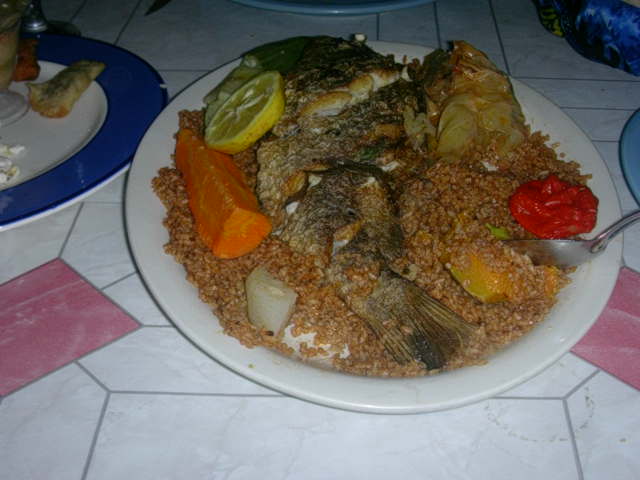
Fish (with tomato sauce and veggies) - my favorite ;
Poisson (avec sauce tomate et legume) - mon choix personnel ;
- Yassa (onions, lemon and pepper sauce) and grilled chicken - the chicken is dreadful - barely any meat onthere, which is too bad because the sauce is otherwise quite good ;
- Yassa (sauce aux oignons, aux citrons et au poivre) et poulet grille - soit-dit en passant, le poulet est affreux, maigre a faire peur, ce qui dommage cas la sauce est autrement tres bonne ;
- Leaf sauce (green and goowy - kinda scary and not very good) ;
- Sauce feuille (verte et gluante - un peu effrayante et pas terrible) ;
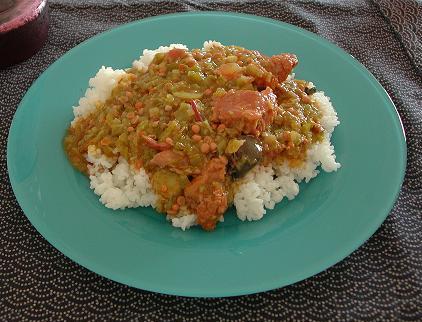
- Okra sauce (also green and goowy with string like bits) ;
- Sauce Gombo (aussi verte et gluante avec une tendance filandreuse).
- Meat sauce (with suspicious unidentified bits of food) ;
- Sauce viande (avec morceaux de nourriture suspects) ;
- Peanut sauce (the smell is quite strong).
- Sauce arachide (l'odeur est tres forte).
When rice is unavailable - because it's very costly, they have back up solutions :
Quand le riz n'est pas disponible, parce que trop dispendieux, il y a d'autres solutions :
Attieke 
Cassava (Manioc)
- attieke (cassava semolina) - which they have in abundance, in Forested Guinea particularly. It's frowned upon like the poor's food, but nevertheless it is a common find in Conakry. Attieke is quite appreciated in Burkina, Ivory Coast and some parts of Ghana.
- l'attieke (semoule de manioc) est abondante en Guinee, surtout en Guinee Forestiere. Elle est meprisee et consideree comme la nourriture du pauvre, mais on peut en trouver facilement a Conakry. L'attieke est tres appreciee au Burkina et en Cote d'Ivoire, et dans certaines regions du Ghana.
- toh (plantain dough or millet dough) is as well common, but not as popular as rice. To is the main dish in Burkina Faso.
- le toh (pate de bananes plantain ou de mil) est aussi commun, mais pas aussi populaire que le riz. Le to est le plat principal du Burkina Faso.
Nevertheless, it's possible to find pizza, pasta, french and chinese cuisine in Conakry at a reasonable, if not ridiculously low price (for North-American standards). Of course, the quality will range from awful to awesome - actually, bad chinese and bad pizza have been redefined in Conakry. It's also common to find burgers and shawarmas (lebanese sandwiches with beef and hummus in a pita).
Tout de meme, il est possible de trouver de la pizza, des pates, et de la cuisine francaise ou chinoise a Conakry pour un prix raisonnable ou meme ridiculement peu eleve (pour les standards Nord-Americains). Bien sur, la qualite varie de merveilleuse a horrible - en fait, le mauvais chinois et la mauvaise pizza on ete re-inventes a Conakry. Il est aussi facile de trouver des burgers et des shawarmas (sandwiches libanais avec du boeuf et du homos dans un pita).
When not eating local or at a restaurant, it's possible to shop at a regular grocery store (held by Lebanese or Indian businessmen) and to find blue cheese and other luxury items - I've already had blue cheese twice here in Conakry, it's kind of a comfort food for me. For the more adventurous, it's also possible to go haggle over veggies and meat at the local market, and bread can be bought at the side of the street.
Quand on ne mange pas local ou dans un restaurant, il est possible de s'approvisionner dans un magasin d'alimentation local (tenu par des hommes d'affaires libanais ou indiens) et d'y trouver du fromage bleu et autres marchandises de luxe - depuis mon arrivee, je me suis deja paye deux lunchs au fromage bleu, c'est une nourriture reconfortante pour moi. Pour les plus aventureux, il est aussi possible d'aller marchander des fruits et de la viande au marche local, et on peut acheter du pain dans la rue.
I want to conclude on the fact that Conakry is a sea-side city and has great grilled fish. With grilled alhoko, it's just great !
Je conclus avec ceci : comme Conakry est une ville maritime, on y trouve de l'excellent poisson grille. Avec de l'alhoko frite, c'est genial !
The Beaver
Merci, Pat et Sophie sur la Rive-Sud pour la tite pinouche !
My guest map is wonderful ! And you'd all be wonderful to post, all of you lurk mode readers!
Thanks and may the winds of Fate blow your way !
July 25, 2005
Green, Blue and Copper...
I think we really needed to get out, because as soon as I came back home from my mum's cottage, Dave and I left to spend the week-end with the in-laws on the shore of the beautiful Lac Huard (Loon Lake).
When that was done, Dave insisted we go out to the nearby village for ice-cream. So I can officially say that my saturday night was spent eating green vanilla ice cream, on the porch of a place called "patate a go go" by a highway, while listening to 80's music. Priceless !
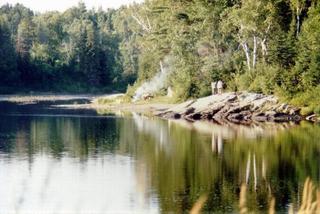
We also had a beautiful siesta in the "pink room" (this is Dave's usual bedroom at the cottage, but being color-blind, he always considered it to be the "blue room" - ignorance is bliss!) After another family dinner, we made our way back to mtl, but not before we made a pit stop by the now infamous "patate a go go".
This morning, I got a phone call from JP telling me that we forgot about the last Fantasia movie, which was last night ! Crap ! Again, ignorance is bliss!
The Beaver

When that was done, Dave insisted we go out to the nearby village for ice-cream. So I can officially say that my saturday night was spent eating green vanilla ice cream, on the porch of a place called "patate a go go" by a highway, while listening to 80's music. Priceless !


We also had a beautiful siesta in the "pink room" (this is Dave's usual bedroom at the cottage, but being color-blind, he always considered it to be the "blue room" - ignorance is bliss!) After another family dinner, we made our way back to mtl, but not before we made a pit stop by the now infamous "patate a go go".
This morning, I got a phone call from JP telling me that we forgot about the last Fantasia movie, which was last night ! Crap ! Again, ignorance is bliss!
The Beaver
July 13, 2005
Fan-tastic Fan-tasia - I'm a fan !
I was discussing movies the other day with a fellow volunteer at the mountain, and he expressed to me his disappointment that the movie industry is no longer producing new ideas. To a certain extent, I agree with him. Hollywood movies are now all remakes. Of children's books. Of comics. Of old movies.
So this is where Fantasia comes in play. Fantasia is a film festival. As their staff puts it :
"Since its inception in 1996, FanTasia has been an event hell-bent on showcasing the most exciting, innovative and individualistic examples of contemporary international genre cinema, with an emphasis on unveiling films very rarely seen in North America. It has become a hugely popular Montreal summer tradition for roughly 70 000 festival-goers to spend three weeks being amazed by sensational celluloid from Japan, Spain, South Korea, Italy, Hong Kong, Germany, Thailand, Denmark, France, Russia, India, New Zealand, Chile, Brazil, Australia, Holland, Scotland, Belgium, Sweden, Great Britain, the US and of course, Quebec and Canada. As fellow film fanatics, we pride ourselves on getting the works that we love in front of an enthusiastic and knowledgeable audience. We also do everything possible to bring these films to the attention of potential distributors and the international media."
This is definitely a forum for new ideas, and funky film making. I've already seen 2 Fantasia movies, Ashura (Japan, 2005) and Crying Fist (Korea, 2005). I will take the time to write a review of both, but in the meantime, let me say this : both were interesting and new. Both had a film technique that was very different from what we're used to. It was, indeed, very refreshing. I can't wait to see more ! (I must say, with the weather we have here, it's nice to be in a nice cool cinema for a few hours...)
ON ON !
The Beaver
So this is where Fantasia comes in play. Fantasia is a film festival. As their staff puts it :
"Since its inception in 1996, FanTasia has been an event hell-bent on showcasing the most exciting, innovative and individualistic examples of contemporary international genre cinema, with an emphasis on unveiling films very rarely
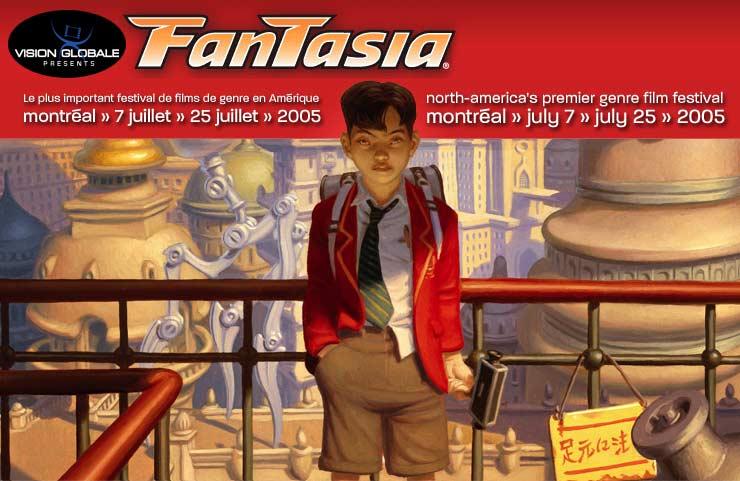 seen in North America. It has become a hugely popular Montreal summer tradition for roughly 70 000 festival-goers to spend three weeks being amazed by sensational celluloid from Japan, Spain, South Korea, Italy, Hong Kong, Germany, Thailand, Denmark, France, Russia, India, New Zealand, Chile, Brazil, Australia, Holland, Scotland, Belgium, Sweden, Great Britain, the US and of course, Quebec and Canada. As fellow film fanatics, we pride ourselves on getting the works that we love in front of an enthusiastic and knowledgeable audience. We also do everything possible to bring these films to the attention of potential distributors and the international media."
This is definitely a forum for new ideas, and funky film making. I've already seen 2 Fantasia movies, Ashura (Japan, 2005) and Crying Fist (Korea, 2005). I will take the time to write a review of both, but in the meantime, let me say this : both were interesting and new. Both had a film technique that was very different from what we're used to. It was, indeed, very refreshing. I can't wait to see more ! (I must say, with the weather we have here, it's nice to be in a nice cool cinema for a few hours...)
ON ON !
The Beaver
July 02, 2005
St-Jean-Baptiste, Quebec National Holiday
On June 24th, I spent the afternoon and evening in Ste-Hyacinth, serving beers to party goers and enjoying the local show of french-canadian music. It was fun to renew with my Quebecer identity and to enjoy the French Canadian way of partying. The whole thing started at 3PM and ended with seemingly cool (well, what I could see from behind the tree) fireworks. No traditionnal bonfire, though, as apparently some Einstein decided to jump in the last bonfire that was made, years ago.
Some may question the existence of a nationalist holiday in a province, but to put all this in perspective, according to a CROP survey, in june, 55% of quebecers would have voted YES to a referendum. Even without ventilation of the indecise, sovereignty would have passed with a meager 52 % based on the 1995 question, which involved a political and economical partership with Canada. Where do I stand ? I don't know. I've been away during most of the events that stand behind such an increase, (the Gomery commission investigating corruption in the federal Liberal party and the student strike contesting modifications to financial aid to students), so I do feel less involved than I might otherwise be. Nevertheless, I am first and foremost a francophone and do feel simpathy for the cause, even if I don't feel that my opinions are strong enough to go along with the new majority.
So anyway, for those who wonder, what is "La Fete Nationale" ? here's a quick wrap-up which also gives you a 101 on French Canadian history. (Thanks, http://www.genealogyforum.rootsweb.com/gfaol/resource/Canada/StJean.htm).
Of European origins...
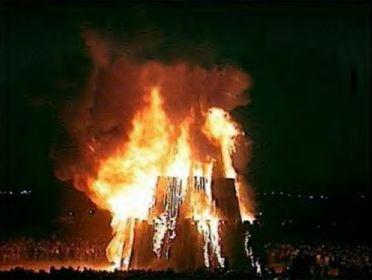 "While the orgin of the holiday in France was the pagan celebration of the summer soltice; a celebration of light and a symbol of hope. In the reign of the French King Clovis, the annual event was christianized and became a religious celebration of the birth of John the Baptist, who is known as the Precursor of Christ, the light of the world – thus the link with the soltice and the bonfires.
The festival of Jean Baptiste had particular importance for all the Catholics of Europe, especially those of France. The King of France would light the bonfire in the nights of June 23 and 24 in Paris.
...a custom which travelled to Quebec...
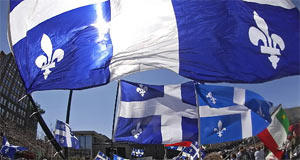 Once in America, the French continued to celebrate this event, but it was then a very pious, religious festival with processions in the streets of Quebec City.
St-Jean Baptiste came to be know as the patron saint of French Canadians as a result of centuries of recognition of the influence he had on New France as new colony was developing from the time of early colonization.
It was on 24 June 1615 that the first St-Jean-Baptiste mass was celebrated in New France, though mass had been celebrated since the times of Jacques Cartier. The religious authorities found that the day coincided with the summer soltice and the birthdate of Jean Baptiste, thus the symbolism of the baptism of New France.
From the 150 French residents of New France in 1635, their customs spread with their pursuit of the fur trade. It was quite important, particularly since it coincides with the summer collection of furs and the gathering of employees who had been isolated during the winter. Large bonfires, singing, fiddle music and dancing are all a part of this festive occasion. The conviver (come together) was boisterous with many les santés (toasts) to health and much gunfire and cannon booms. Festivities lasted throughout the night.
French residents in the St. Lawrence River area formed a chain of bonfire lights from village to village. Even in the late 20th Century, more than 15,000 of these fires could be seen on 24 June. Soldiers mustered to fire cannon and muskets as a part of the provincal.
Which survived the British conquest...
After the conquest of New France by the British, the celebration of St-Jean Baptiste lost some of its importance. It was just over two centuries later on 24 June 1834 when Ludger Dunvernay, a newspaper editor, and about 60 people decided during a banquet to turn that day into an event that would unite all French Canadians. The festival grew in size and importance to French Canadians.
A great number of English-Speaking Montrealers took part in the national banquet, which was held in the gardens of a prominent lawyer, John McDonnell. While the enthusiasm for the annual event were put on hold during and after the Patriot’s Rebellion in 1837-38, Celebration of the Fête de la Saint-Jean as it was named, reappeared in Quebec City in 1842 as a religious festival with a great procession. Montreal followed suit in 1843.
... and was declared a statutory holiday...
The annual celebration grew and in 1925 the Quebec legislature declared June 24 as a holiday.
(...) The usual order of activities would open with a mass to commemorate St-Jean Baptiste. A parade would follow the streets of the villages with a band, baton twirlers, people dressed in period costumes and floats. The last float would represent St-Jean Baptiste with a blonde and curly haired child wearing sheep skin, holding a cane. One or more lambs would signify a shepherd and his flock of sheep.
After the parade there was a banquet with entertainment, folkloric dances and the day would end with a great bonfire and fireworks.
...with nationalistic meaning...
The evolution of St-Jean-Baptiste Day from a religious to a nationalist celebration was complete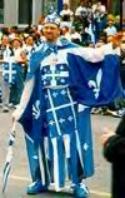 by 1975. In 1976, the Province of Quebec government passed legislation making it the official national holiday of Quebec and an official paid holiday. The name of the holiday was then changed to la Fete Nationale, though many still refer to it as St-Jean-Baptiste Day.
At the beginning of the 19th century, in towns and villages along the St-Lawrence River, it was customary to take the first swim of the year on the even of St-Jean-Baptiste Day. Even today most swimming pools in Quebec open for the season around that day.
Another tradition was the petits pains benits (blessed loaves of bread). These bread loaves were shaped either as a star (another announcement of the birth of Christ) or heart (For God so loved the world). They were then given to the priest. This is not the same as the Lord’s Supper.
Many other French-speaking villages in other provinces celebrate St-Jean-Baptiste Day and several of them have churches named for the patron saint. And there are villages named for St. Jean Baptiste—one in Manitoba is known as the soup pea capital of Canada. Several are in the Province of Quebec."
June 18, 2005
Beaver's guide to the Montreal nightlife
Le Sainte-Elizabeth
(I couldn't find a picture, so go check out their website...)
When you walk in, it looks like your average "Irish-style" pub, nice and dark, lots of wood, an island bar, and some cozy sofas. Uptairs you can find a nice long bar, with plenty of taps, more seating, and a section behind the bar where you can sit near plate-glass windows that give you a bird's eye view of the terrasse in the back.
The terrasse in itself deserves a 5 for atmosphere. In my humble opinion, it's the nicest one in Montreal. Feels homey and secluded, with trees, vines climbing up the brick walls, even propane heaters when it gets chilly.
I went there with Hubby and a couple of friends for a friday evening drink a few weeks ago. Definitely one of the best places to go in Montreal, if you want to have a nice chat with friends in a partying, relaxed environment.
Foufounes Électriques
The punk mecca (aka Fouf) has lost some of its popularity, mainly because.. of too much popularity. It's the kind of place where you'd have seen tourists sitting at one table and spiked hair suburban punk-wannabes at another. After it re-opened last year, it's back on the right track with many live shows. It's interesting from the outside as is from the inside. There's (or use to be) an Internet cafe on the ground floor. P.S. The name means electric buttocks.

I went there to have a drink with my honey a month or so ago and was disappointed in the lack of fauna present. It was still early though, so I'm willing to check it out again...
Ye Olde Orchard
"Ye Olde Orchard, a neighbourhood pub with the flavour of the old country. "


This one is a favorite of my Scout-Leader friend, who inevitably wants to go there where offered to go out for a beer. A very cool place with live music on weekend nights.
A strange mix of 40 year old's and 20something's enjoy the party at the Ye, creating a cool atmosphere to let go. Don't plan to stay after midnight though, the action ends a bit early.
McKibbin's
Your typical Irish Pub, at the heart of Montreal ! The atmosphere is good, and a sense of friendly crowd that combined the people working downtown and university students. The McKibbin's is combined in three spots. Upstairs the Toucan Club(Ladies Night on Wed) and the Shebeen downstairs.Most of the nights there are some bands playing, but the selections of band was better in a recent past, with 139 South splitting to bits and replaced with less irish, more contemporary groups !

I revisited this old hangout spot of mine recently, after a particularly difficult consultation at the Y. I was alone, but not for long, as I actually stroke a conversation with a bunch of engineers of international backgrounds : Brazilian, Polish and Irish. It turned out to really be a nice evening ! Definitely a good place to have a beer on one's own...
(I couldn't find a picture, so go check out their website...)
When you walk in, it looks like your average "Irish-style" pub, nice and dark, lots of wood, an island bar, and some cozy sofas. Uptairs you can find a nice long bar, with plenty of taps, more seating, and a section behind the bar where you can sit near plate-glass windows that give you a bird's eye view of the terrasse in the back.
The terrasse in itself deserves a 5 for atmosphere. In my humble opinion, it's the nicest one in Montreal. Feels homey and secluded, with trees, vines climbing up the brick walls, even propane heaters when it gets chilly.
I went there with Hubby and a couple of friends for a friday evening drink a few weeks ago. Definitely one of the best places to go in Montreal, if you want to have a nice chat with friends in a partying, relaxed environment.
Foufounes Électriques
The punk mecca (aka Fouf) has lost some of its popularity, mainly because.. of too much popularity. It's the kind of place where you'd have seen tourists sitting at one table and spiked hair suburban punk-wannabes at another. After it re-opened last year, it's back on the right track with many live shows. It's interesting from the outside as is from the inside. There's (or use to be) an Internet cafe on the ground floor. P.S. The name means electric buttocks.
I went there to have a drink with my honey a month or so ago and was disappointed in the lack of fauna present. It was still early though, so I'm willing to check it out again...
Ye Olde Orchard
"Ye Olde Orchard, a neighbourhood pub with the flavour of the old country. "
This one is a favorite of my Scout-Leader friend, who inevitably wants to go there where offered to go out for a beer. A very cool place with live music on weekend nights.
A strange mix of 40 year old's and 20something's enjoy the party at the Ye, creating a cool atmosphere to let go. Don't plan to stay after midnight though, the action ends a bit early.
McKibbin's
Your typical Irish Pub, at the heart of Montreal ! The atmosphere is good, and a sense of friendly crowd that combined the people working downtown and university students. The McKibbin's is combined in three spots. Upstairs the Toucan Club(Ladies Night on Wed) and the Shebeen downstairs.Most of the nights there are some bands playing, but the selections of band was better in a recent past, with 139 South splitting to bits and replaced with less irish, more contemporary groups !
I revisited this old hangout spot of mine recently, after a particularly difficult consultation at the Y. I was alone, but not for long, as I actually stroke a conversation with a bunch of engineers of international backgrounds : Brazilian, Polish and Irish. It turned out to really be a nice evening ! Definitely a good place to have a beer on one's own...
March 15, 2005
Corneille en Concert ! Africa live !
Le weekend dernier, le festival Africa Live a déchiré Dakar et la Médina :
"Parmi les artistes présents se trouvaient Youssou N'dour, qui organisait l'événement, de même que Tinariwen, Rokia Traoré, Salif Keïta, Didier Awadi, Manu Dibango et Awilo Longomba.
Le festival Africa Live-Roll Back Malaria s'inscrit dans le cadre du Partenariat pour faire reculer le paludisme. Il a été lancé en 1998 par l'Organisation mondiale de la Santé, le Programme des Nations unies pour le développement, le Fonds des Nations unies pour l'enfance, ainsi que la Banque mondiale.
La malaria (ou paludisme) affecte environ 600 millions de personnes dans le monde. il s'agit de la maladie la plus répandue sur le globe; un enfant africain en meurt toutes les 30 secondes." (Source : LCN)
Corneille y était et bien franchement, il était excellent. Les membres du public (majoritairement Sénégalais mais aussi une minorité d'expatriés, de mauritaniens et d'étudiants africains d'autres pays) étaient en délire, particulièrement les jeunes femmes qui me semblaient dans le même état que les fans de Beatles dans les documentaires, exaltées, heureuses, criantes et au bord des larmes tout à la fois.
Quelques remarques tout de même :
"Parmi les artistes présents se trouvaient Youssou N'dour, qui organisait l'événement, de même que Tinariwen, Rokia Traoré, Salif Keïta, Didier Awadi, Manu Dibango et Awilo Longomba.
Le festival Africa Live-Roll Back Malaria s'inscrit dans le cadre du Partenariat pour faire reculer le paludisme. Il a été lancé en 1998 par l'Organisation mondiale de la Santé, le Programme des Nations unies pour le développement, le Fonds des Nations unies pour l'enfance, ainsi que la Banque mondiale.
La malaria (ou paludisme) affecte environ 600 millions de personnes dans le monde. il s'agit de la maladie la plus répandue sur le globe; un enfant africain en meurt toutes les 30 secondes." (Source : LCN)
Corneille y était et bien franchement, il était excellent. Les membres du public (majoritairement Sénégalais mais aussi une minorité d'expatriés, de mauritaniens et d'étudiants africains d'autres pays) étaient en délire, particulièrement les jeunes femmes qui me semblaient dans le même état que les fans de Beatles dans les documentaires, exaltées, heureuses, criantes et au bord des larmes tout à la fois.
Quelques remarques tout de même :
- Youssou N'dour a chanté une chanson sur la nécessité d'enlever les eaux usées et le sérieux de la malaria, mais... en anglais, devant un public majoritairement francophone !
- Le message sur les aux usées... au stade en tout cas il était pas passé, les toilettes étaient infectes !
- Fa Coly : l'Afrique en a marre marre marre... scandé avec une joie extraordinaire... paradoxal, non ?
- Je remarque la quantité de chansons anti-coloniales qui ont été chantées, par les rappeurs entre autres. Si le but du festival est de conscientiser la communauté internationale, je veux bien, mais on était au bord du sentiment anti-étranger.
Je profite de l'occasion pour rendre hommage à toutes les personnes de couleur noire qui sont en Europe ou en Amérique du Nord. Encore une fois, le concept de minorité visible etait tres tres réel pour moi. En même temps, au coeur de la fête, il s'effaçait totalement pour faire place a la joie d'être ensemble et de s'amuser !
February 11, 2005
Nakodje... faut lacher quoi !
Nous avons, encore une fois, assisté à un concert de musique africaine. Le groupe Nakodjé est un ensemble éclectique comprenant, outre le chanteur-guitariste et les trois choriste, une flute traditionnelle, une basse, une batterie, une clarinette, une kora, un balafon et deux djembés. Ça en fait du monde sur la scène ça !
Le chanteur était, définitivement, en train de s'éclater comme un malade sur la scène alors que les toubabs, majoritaires dans l'assemblée, le regardaient l'air de se dire "hmmm j'aime ou j'aime pas ? Est-ce que je dois danser ? Comment je réagis à ce truc ?" Bien sur, la gang de filles, bien ancrée sur leurs siège était aussi perplexe que le reste du monde... sauf que vient un moment d'épiphanie, ou serais-ce de folie, ou on commence à se dandiner, à danser, à rire, à taper des mains. Quelques courageux se mettent sur la piste de danse, la majorité vibre assise, et quelques récalcitrants restent la, les bras croisés, à se dire ("Je veux rentrer à la maison, qu'est-ce que je fais ici ?")
Le spectacle a duré 2 heures, et à la fin, on était quand même prêtes à danser. En bout de ligne, on apprécie tout autant que les autres, seulement, on est plus lents à la détente !
Le chanteur était, définitivement, en train de s'éclater comme un malade sur la scène alors que les toubabs, majoritaires dans l'assemblée, le regardaient l'air de se dire "hmmm j'aime ou j'aime pas ? Est-ce que je dois danser ? Comment je réagis à ce truc ?" Bien sur, la gang de filles, bien ancrée sur leurs siège était aussi perplexe que le reste du monde... sauf que vient un moment d'épiphanie, ou serais-ce de folie, ou on commence à se dandiner, à danser, à rire, à taper des mains. Quelques courageux se mettent sur la piste de danse, la majorité vibre assise, et quelques récalcitrants restent la, les bras croisés, à se dire ("Je veux rentrer à la maison, qu'est-ce que je fais ici ?")
Le spectacle a duré 2 heures, et à la fin, on était quand même prêtes à danser. En bout de ligne, on apprécie tout autant que les autres, seulement, on est plus lents à la détente !
February 01, 2005
Ba Cissokho
I just came back from a musicalconcert with friends at the CCF, which was absolutely great. The groupwas from Guinea Conakry, another west-African country. It was interesting because it involved a mix of traditional music andinstruments, with modern rhythms and pop instruments (in theoccurrence, it was the base). It was, I’d say, like African Jazz. Butthen again, didn’t jazz originate from this continent ? It took ustime to warm up to the music, but by the time the concert was over wewere on fire ! I can’t help but think that the Africans are such anexuberant people. I mean, in what other place would you have members of the public come up and dance on stage freely during the show ? This evening was a great lesson in the art of partying : it’s all about letting go, letting itall hang out, and the people there certainly taught me that tonight !
Subscribe to:
Posts (Atom)

